Showing posts with label life skills. Show all posts

Tuesday, February 19, 2013

Baking bread & making chicken noodle soup

Yesterday, when I checked the weather forecast I saw we were in for 2 days of nasty weather.  It was warm but very rainy yesterday.  We got 3/4 inch of rain yesterday.  At times it was VERY windy.  At one point, we couldn't even see across the yard.

Since we had 2 days of yuck ahead of us, I decided to start some sourdough-type bread.  My favorite cookbook is the Better Homes and Gardens cookbook.  You know the one - red & white checked.

My go-to cookbook
The bread recipe I'm using today is on page 137 "Artisan-Style" French Bread.  I like this recipe very much.

First, it doesn't use any refined sugar, butter or other fat, or any dairy.  So it's great for those who are lactose intolerant.  The recipe calls for rye flour.  I substituted some 6-grain cereal.  I use King Arthur unbleached flour.

King Arthur Flour


I prefer King Arther flour because I like the flavor.  It's a little bit "sweeter". 


I will also sprinkle the same 6-grain cereal on top of my bread just before I put it in the oven.

6-grain cereal

To make the starter, I mixed 1 cup of warm water with 1/4 teaspoon active dry yeast.  I set this aside and left it for 5 minutes.  In a separate bowl I combined 1 cup of unbleached flour and 2 tablespoons of 6-grain cereal. When the 5 minutes were up, I poured the water/yeast mixture into the flour and thoroughly mixed it with my trusty wooden dough paddle.  I covered the bowl with plastic wrap and 2 dishtowels.  I then let it sit on the kitchen island for 24 hours.

So, here's what the started looked like after working for 24 hours.
Sourdough starter
The starter is VERY sticky.  It's a bit bubbly.  And it smells very yeasty.  Not "sour" per say.

The little flecks you see are the cereal grains.  This will add some nice texture and flavor to the dough.

Before I did anything further to the starter, I got my work area prepared.  Here's all the different items I use.

My bread pan


My flea market find!  It's great for baking bread.

My kitchen island work station
Floured kneading board

See the bread starter there in the covered bowl?

When John and I were designing this kitchen island from an old dresser and a discarded butcher block that we found in the barn I made sure the top was at the right height for kneading bread.  With my wonky back, I can't be bending over at the waist.  And so this island is higher than most.  It's just the way I like it.


I had to put flour on my kneading board in preparation for kneading the bread.   This board is plastic rather than wood.  It has a nice elasticized cotton cover which can go right in the washing machine.  It also has nice rubber feet, so I doesn't move around when I'm kneading.  I really like that. 


Starter with flour and water added
Once I had my work space all prepared, I uncovered the dough starter and added 1 cup of warm water.  I stirred this in very well.  Then I added another 3 cups of flour.    I worked this in well.  I then turned the dough out onto the kneading board and worked with it until it wasn't sticky any more.  I then let it rest for 20 minutes to allow the new addition of flour to start working with the yeast.

Resting dough
Kneading dough - goofy face and all
Then I poured some additional flour onto the kneading board (but NOT onto the dough) and began kneading.  As I worked the dough over and over, I slowly incorporated this additional flour.  The trick here is to add enough flour that your dough isn't sticky any more, but not so much it becomes stiff.  It should be a bit glossy and smooth "as a baby's butt".  My mom taught me to knead bread when I was little... maybe 5 or so.  It's still one of my favorite kitchen chores.  I love kneading and baking bread.  And the smell of home baked bread is one of my primal "home" scents.  Bread warm from the oven with butter.  Oh man, I'm in HEAVEN!

Oops, I'm getting distracted and making my stomach growl.


Dough after kneading

After I've kneaded the bread to perfection, I place it in a clean bowl.  I cover this with clean plastic wrap and set it aside to double in size.  About 2 hours.


Now, while the dough is rising I'll start the chicken noodle soup.  Using the same cookbook, I found the recipe on page 497.  Old-fashioned Chicken Noodle Soup. Making chicken soup from scratch is very easy.  It just takes some time.

Chicken thighs


Thaw your chicken the night before.


Brown your chicken
Pour some olive oil in your dutch over and heat it.  Place your chicken in, and brown it well.  I also salt the chicken at this time, because I find it penetrated the chicken better than it would if I just added salt once I add the water.


Once it is well browned, cover it with water.


Cover with water and simmer until tender

Now lower the heat and let this simmer for several hours.

Once the chicken is thoroughly cooked, remove it from the broth and let it cool.  Remove the skin and bone.  Cut the meat into bite size pieces.


Add the egg noodles and carrots to your broth and cook for 8 minutes or until tender.  Add the meat back into the broth.  That's it.   It's done!


Sliced carrots


Yummy chicken noodle soup


Now, back to finishing the bread.

Once the dough has doubled in size, I get my cast iron pan heating in the oven (350 F).  That's important because it takes so long for the pan to get up to temperature.  If it's not up to temperature, it dramatically increases the baking time of the bread.

As the pan is preheating in the oven, I punch the dough down 1 more time.  If I'm making 1 large loaf I just knead this batch for about a minute and then let it rest for maybe 10 minutes.  If I'm going to make rolls, I'd start dividing this into balls about 2/3's the size I want my rolls to be.

Once the pan is up to temp, I put my dough in.  I then rub butter or olive oil on to help form a nice crust & then  sprinkle some of the 6-grain cereal and some sunflower seeds on. (Darn, I forgot to take a picture!)

Baking the bread at 350 takes about 60 minutes.  If you're baking rolls you can increase the heat to 450, and they'll be done in about 20 minutes.  You bread or rolls are done when they make a nice "thunk" when you snap them with your finger.  I always make a small slit into the top of a loaf to make sure it's baked all the way through.

Finished bread


This bread has a nice fine texture and is very tasty. 


And here's what our dinner looked like.  YUMMY!

Bread, soup and tea

Thursday, January 17, 2013

Crafting

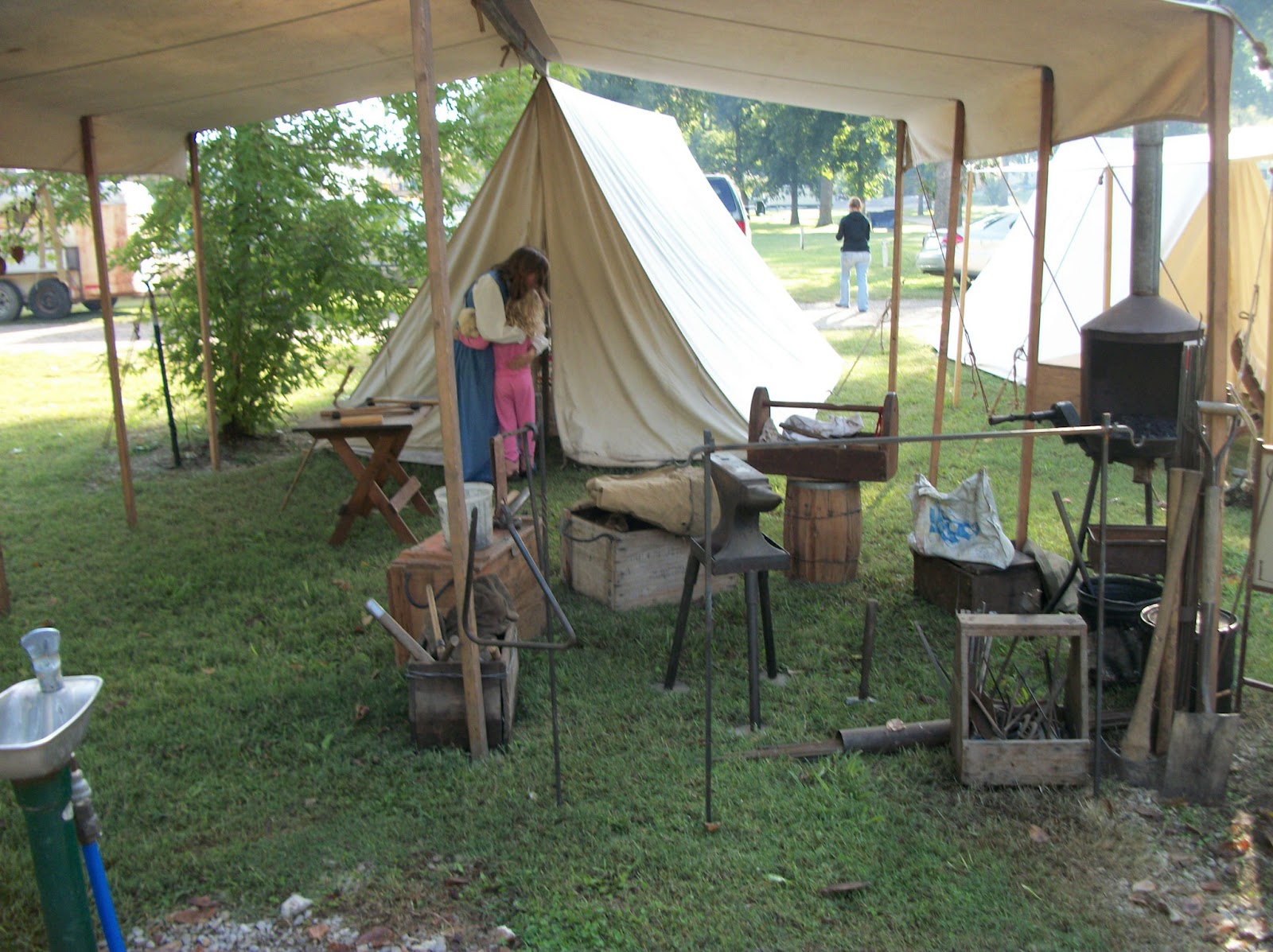
Blacksmiths shop at Hardy Homesteaders Day 2012

When most people think of crafts, they think of the art projects they made in school.  When I think of crafts, I think of the ancient way of life of the craftsman.

In times past, when a child reached a certain age (about age 8 or so), they began to learn a craft or trade.  Farming is a trade.  Being a potter is a trade.  Being a blacksmith is a trade.  Being a tinker, tailor, spinner, weaver, dyer, tanner, miller, stonemason, baker, butcher, cheese maker, cobbler, cooper, fletcher, sawyer, bookbinder, cabinet maker....

Tradesmen and craftsmen (and women!) made the things everyone needed for their daily use.  And finding the raw materials to make the things they sold was an ongoing preoccupation.  You can't weave a blanket if you don't have yarn.  Or a loom, or a shuttle.

The 4-harness Scandinavian style loom we built


You can't bake bread if you don't have flour.  You can't have flour if you don't have a miller, farmer, stonemason, quarry worker, sawyer and blacksmith.  Of sure, you can grind wheat in a mortar and pestle.  It's not as fast or as efficient.  But you still need a farmer and someone to make the mortar & pestle.  And you need someone to build the oven.  A bricklayer and a brick maker.  And you need the dairy farmer for your butter and milk to go into the bread.  And what about the salt?  Where does the salt come from?  Wikipedia Salt mining article

So many of us are so used to going to the grocery store to get what we need.  The old Mom & Pop general stores are mostly gone, which is a real shame.  And the old hardware stores are a thing of the past.

But, if you're trying to be as self-sufficient as possible as a homesteader you have to figure out where to get all those kinds of things.  Who do you turn to for resources?  Who in your community can teach you what you need to know.

Antique stores are a great place to find the tools and utensils of the past.  But you still need the knowledge of how to use and repair them.

I love spinning yarn on my antique spinning wheel.

When my husband Johnnie and I got together 8 years ago, he'd never SEEN a working spinning wheel.  And then I got 7 from Ebay.  And every single one was broken in some manner.  I could tell him what was wrong with it.  But I don't have the wood working skills to make the repairs.  He does.  And now he's teaching our son Joshua those same skills.  Those kind of skills are SO valuable!  I can't spin on a broken spinning wheel. 

Do you remember the old poem "for the want of a nail"?  That is what life is REALLY like.  Not video games.  Not Youtube.  Not Facebook.  Real life is about knowing people, sharing your skills with people, bartering, and building relationships with real people in your area.

I love living in rural America.  It's so rewarding to make things with my hands & share my skills and products with people I know.  And I want to keep busy making things every day of my life.

Friday, January 11, 2013


Today I'd like to start writing about living in rural America.  I love living in the woods with my family and animals.  It's very private and restful.

My husband and stepson like to putter around outside, working with the one-man saw mill or the lathe.  Or they might be loading ammo while enjoying the wood cook stove.  They might work on splitting wood.  They stay busy.

I spend most of my time in the house.  I like to cook and bake, make cheese or do some canning.  I might do some spinning or knitting.

Sometimes we run to town for our errands, and have some lunch.  But we spend most of our time at home.  And we like that way.

I wouldn't consider us "preppers".  Because we're not considered about the "end of the world".  But the weather here in Arkansas can turn bad - really bad- at any time.

Since we moved here in 2006, there have been floods, tornados, snow storms, ice storms, really strong thunderstorms, drought and very high temperatures.  If making sure your property is safe through all those conditions doen't keep you busy, you're not paying attention to the real world